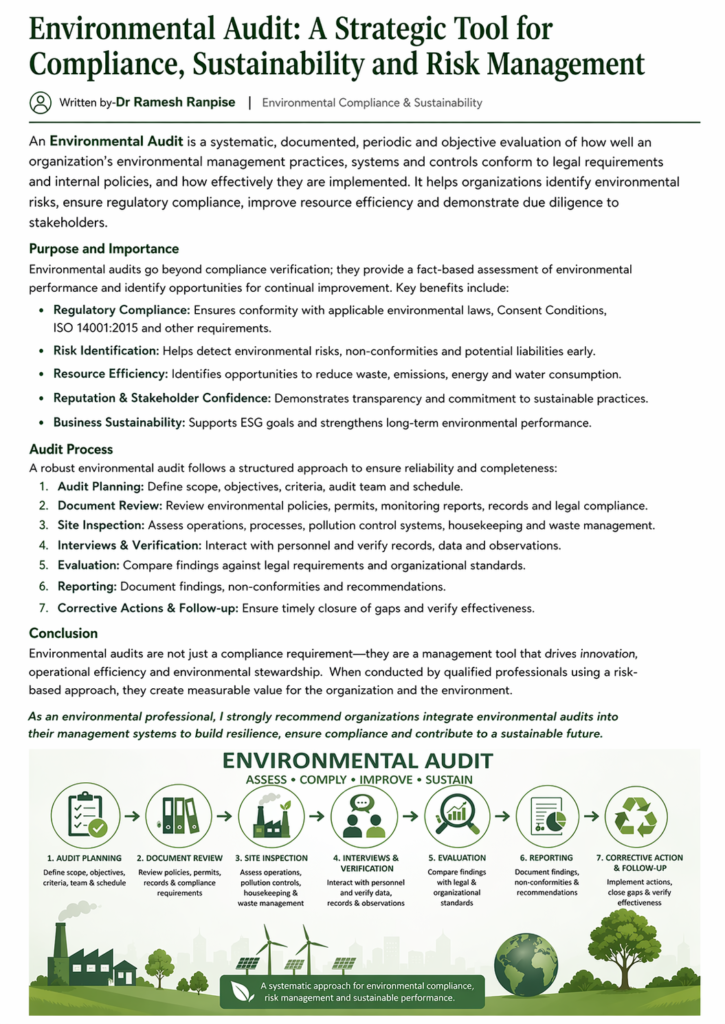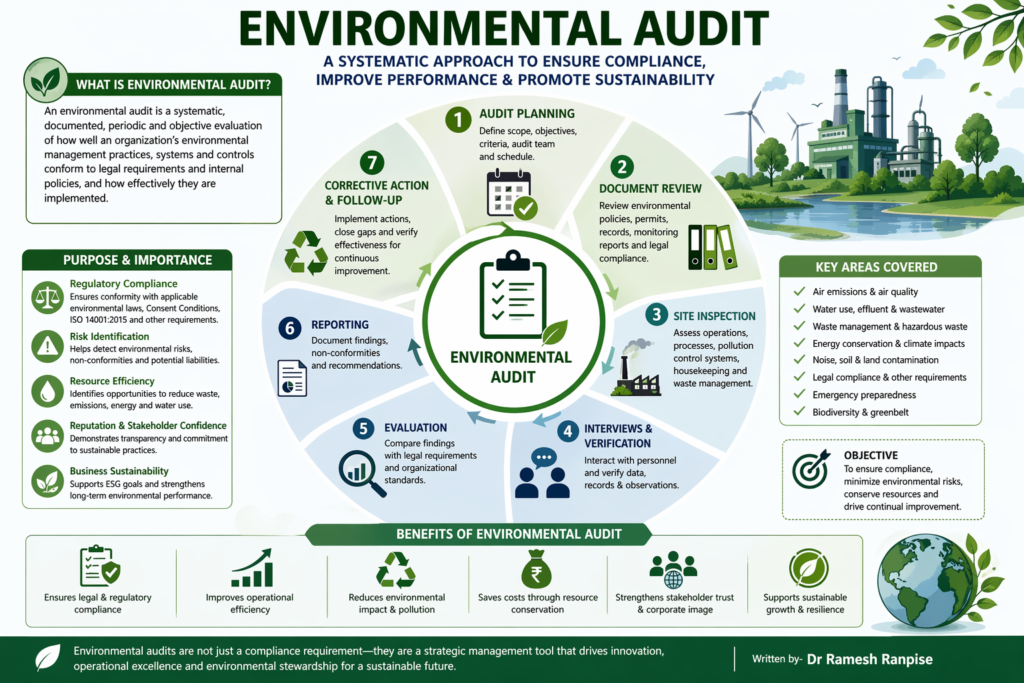
Environmental Audit as a structured tool for ensuring compliance, sustainability, and risk management.
It defines an environmental audit as a systematic, documented, and objective evaluation of an organization’s environmental performance against legal requirements and internal policies. The content emphasizes that audits are not limited to compliance but also help in identifying risks, improving resource efficiency, and strengthening ESG performance.
Key benefits highlighted include:
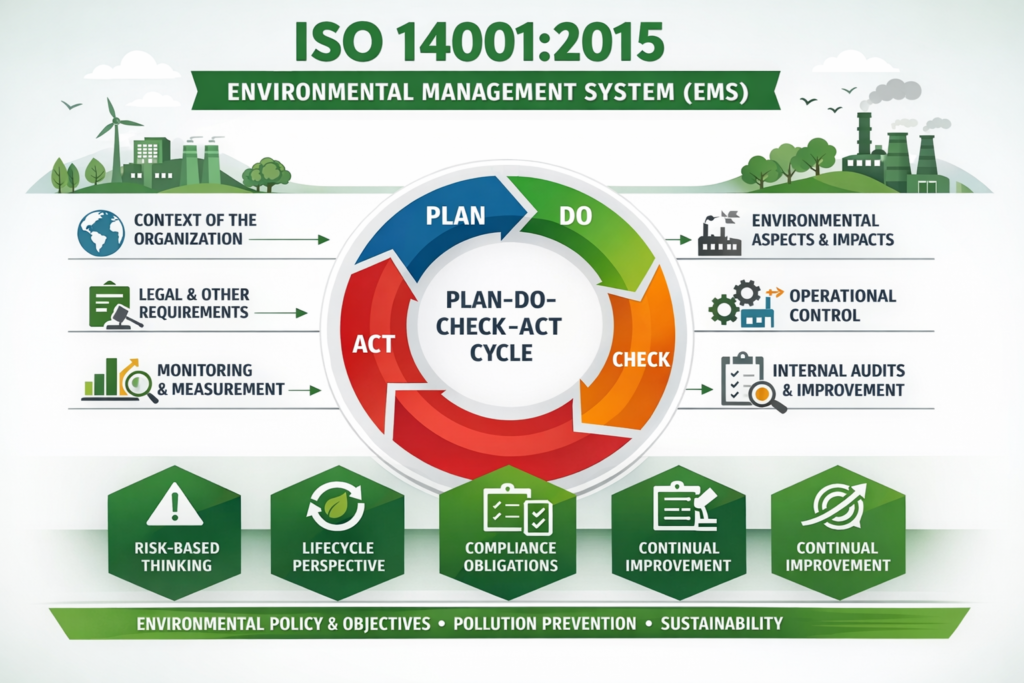
- Ensuring regulatory compliance with standards such as ISO 14001
- Early risk identification and mitigation
- Improved resource and energy efficiency
- Enhanced stakeholder confidence and corporate reputation
- Support for long-term business sustainability goals
Step-by-step audit process, covering:
- Audit planning
- Document review
- Site inspection
- Interviews and verification
- Evaluation against standards
- Reporting of findings
- Corrective actions and follow-up
Finally, it concludes that environmental audits are a strategic management tool that drive continuous improvement, operational efficiency, and environmental stewardship.