Strengthening Environmental Performance Through Competence and Compliance
1. Introduction
Environmental challenges such as pollution, climate change, resource depletion, and regulatory pressure are increasingly influencing how organizations operate. ISO 14001:2015 provides a globally accepted framework for managing environmental responsibilities in a structured and systematic manner.
Environmental Training on ISO 14001:2015 is essential to ensure that employees understand the requirements of the standard and are competent to implement and maintain an effective Environmental Management System (EMS).
2. What Is ISO 14001:2015?
ISO 14001:2015 is an international standard that specifies the requirements for an Environmental Management System (EMS). It helps organizations identify, manage, monitor, and control their environmental aspects in a way that contributes to environmental protection, legal compliance, and continual improvement.
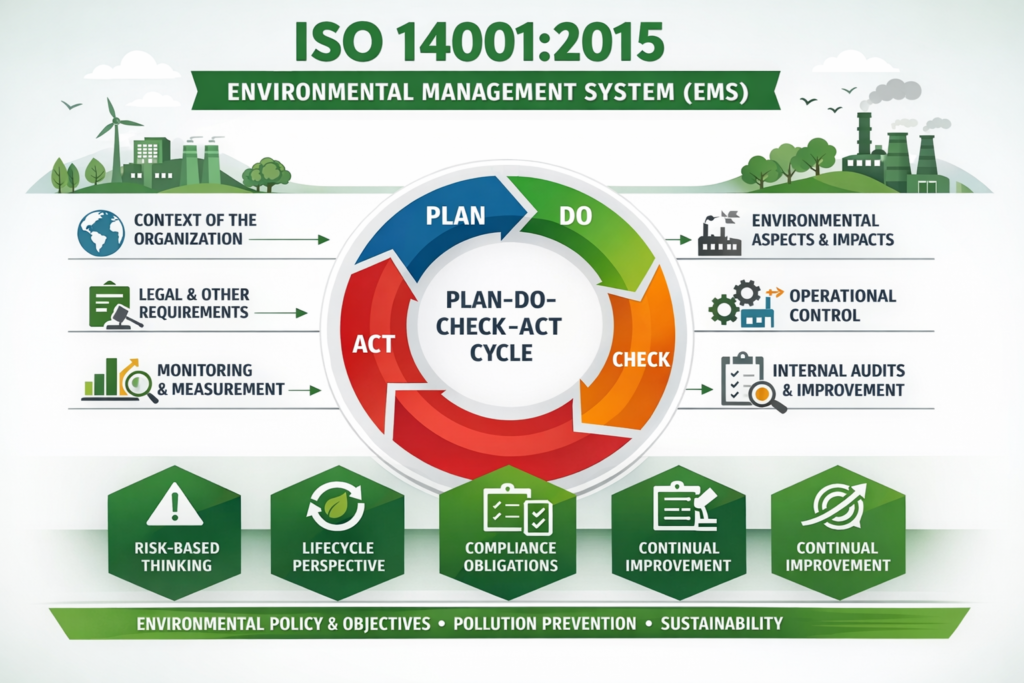
The 2015 revision emphasizes:
- Risk‑based thinking
- Lifecycle perspective
- Leadership involvement
- Integration of EMS into business processes
ISO 14001 follows the Plan–Do–Check–Act (PDCA) cycle to ensure continual improvement in environmental performance.
3. Importance of Environmental Training for ISO 14001:2015
ISO 14001 certification alone does not ensure effective environmental management. Competent and trained personnel are critical for successful EMS implementation. Environmental training bridges the gap between standard requirements and practical application at workplace and project sites.
Key objectives of ISO 14001 environmental training include:
- Improving awareness of environmental responsibilities
- Ensuring compliance with environmental laws and permits
- Identifying and controlling environmental risks and impacts
- Enhancing operational control and emergency preparedness
- Supporting continual improvement and audit readiness
4. Core Elements Covered in ISO 14001:2015 Environmental Training
1. Understanding ISO 14001:2015 Structure
- High‑Level Structure (Annex SL)
- Context of the organization
- Interested parties and compliance obligations
2. Environmental Aspects and Impacts
- Identification of environmental aspects
- Evaluation of significance using risk‑based approach
- Normal, abnormal, and emergency conditions
- Lifecycle perspective (design, operation, disposal)
3. Legal and Other Requirements
- Identification of applicable environmental laws and regulations
- Consent, authorization, and permit requirements
- Evaluation of compliance and regulatory reporting
4. Environmental Objectives and Planning
- Setting measurable environmental objectives and targets
- Environmental management programs
- Action plans aligned with organizational strategy
5. Operational Control and Emergency Preparedness
- Control measures for significant environmental aspects
- Contractor and supplier environmental management
- Emergency preparedness and response planning
6. Monitoring, Measurement, and Performance Evaluation
- Environmental monitoring and controls
- Data analysis, trends, and performance indicators
- Corrective and preventive actions
7. Internal Auditing and Management Review
- Principles of ISO 14001 internal audits
- Nonconformity identification and root cause analysis
- Management review and continual improvement
5. Benefits of ISO 14001 Environmental Training
Organizations that invest in structured ISO 14001 training typically achieve:
- Improved environmental compliance and reduced legal risk
- Better control of emissions, waste, noise, and resource usage
- Enhanced environmental awareness across workforce
- Stronger environmental performance and sustainability outcomes
- Improved integration with ISO 9001 and ISO 45001 systems
Environmental Training as a Business Enabler
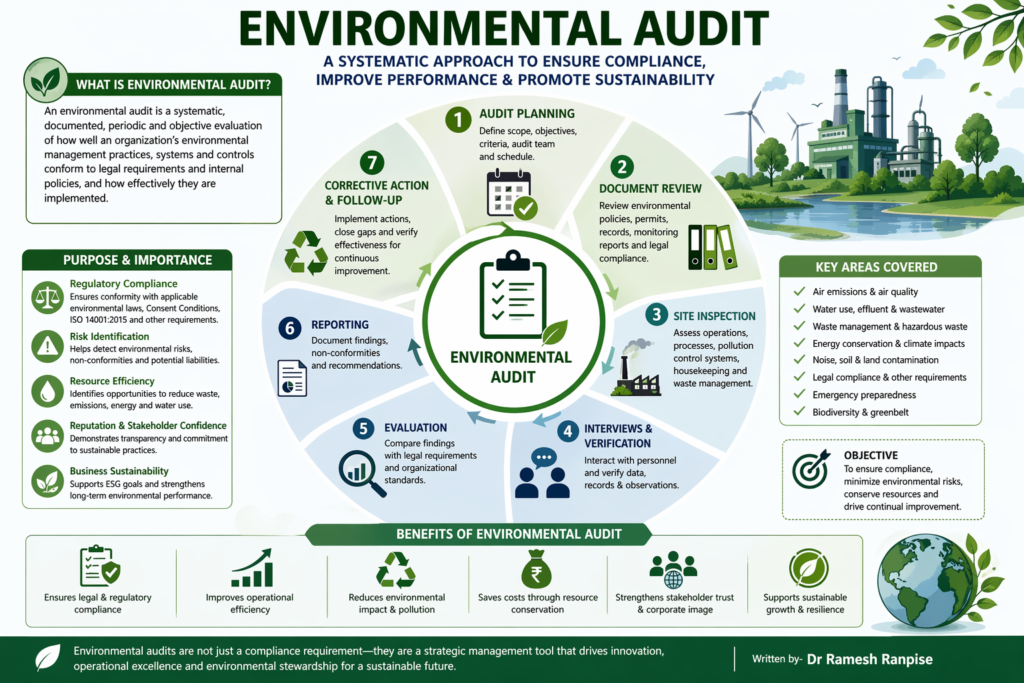
ISO 14001:2015 environmental training is not just a compliance requirement—it is a strategic investment. Well‑trained employees help organizations minimize environmental risks, reduce costs, improve efficiency, and enhance corporate image while supporting long‑term sustainability goals.
6. Conclusion Environmental Training on ISO 14001:2015 is the backbone of an effective Environmental Management System. By developing technical understanding and practical competence, organizations can ensure regulatory compliance, prevent environmental incidents, and drive continual improvement.
A well‑implemented ISO 14001 training program strengthens environmental culture and supports sustainable, responsible business operations.