Rising Temperature
Across the globe, people are experiencing increasingly intense summers—longer heatwaves, higher peak temperatures, and more unpredictable weather patterns. Cities, in particular, are becoming “heat traps” due to dense construction, traffic emissions, and limited green cover. This phenomenon, often linked to climate change and urbanization, is not just uncomfortable—it affects public health, water resources, ecosystems, and energy demand.
Extreme heat conditions can lead to dehydration, heatstroke, reduced productivity, and increased mortality, especially among vulnerable populations. At the same time, higher temperatures accelerate air pollution reactions, worsening air quality—something especially relevant in fast-growing urban regions.
Why Is This Happening?
Several factors are contributing to the current situation:
- Climate Change: Rising greenhouse gas emissions are increasing global temperatures.
- Urban Heat Island Effect: Concrete, asphalt, and buildings absorb and retain heat.
- Loss of Green Cover: Trees and vegetation that naturally cool the environment are being reduced.
- Industrial and Vehicular Emissions: These not only add heat but also degrade air quality.
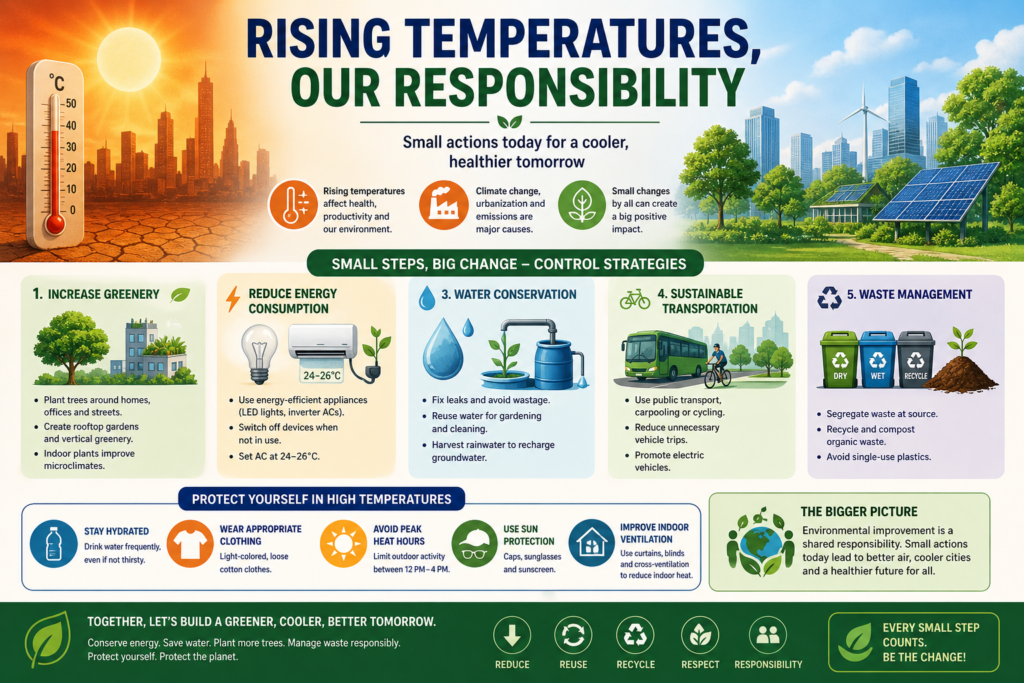
Small but Effective Control Strategies
You don’t need massive infrastructure changes to make a difference. Small, consistent actions—especially when adopted collectively—can significantly improve environmental conditions.
1. Increase Greenery 🌱
- Plant trees around homes, offices, and streets.
- Encourage rooftop gardens and vertical greenery.
- Even indoor plants can improve microclimates.
2. Reduce Energy Consumption ⚡
- Use energy-efficient appliances (like LED lights and inverter ACs).
- Switch off devices when not in use.
- Set air conditioners at moderate temperatures (24–26°C).
3. Water Conservation 💧
- Fix leaks and avoid wastage.
- Reuse water where possible (e.g., for gardening).
- Harvest rainwater to recharge groundwater.
4. Sustainable Transportation 🚶♂️
- Use public transport, carpooling, or cycling.
- Reduce unnecessary vehicle trips.
- Promote electric vehicles where feasible.
5. Waste Management ♻️
- Segregate waste at source.
- Recycle and compost organic waste.
- Avoid single-use plastics.
Personal Protection in High Temperatures
While working toward long-term solutions, it’s important to protect yourself from current heat conditions:
- Stay Hydrated: Drink water frequently, even if not thirsty.
- Wear Appropriate Clothing: Light-colored, loose cotton clothes.
- Avoid Peak Heat Hours: Limit outdoor activity between 12 PM–4 PM.
- Use Sun Protection: Caps, sunglasses, and sunscreen.
- Improve Indoor Ventilation: Use curtains, blinds, and cross-ventilation to reduce indoor heat.
The Bigger Picture
Environmental improvement is not only the responsibility of governments or industries—it’s a shared responsibility. When individuals adopt small changes, the cumulative impact becomes powerful. Especially in urban and industrial environments, integrating environmental awareness into daily routines can help reduce heat stress, improve air quality, and create healthier living conditions.
Conclusion
Today’s rising temperatures are a warning sign of broader environmental imbalance. While large-scale policy and technological changes are essential, everyday actions by individuals play a critical role. By conserving energy, increasing greenery, managing waste, and protecting ourselves from heat, we can collectively move toward a more sustainable and resilient future.