This review paper analyzes global research on urban road traffic noise, focusing on its monitoring, exposure, modelling, and mitigation strategies. The study critically evaluates 67 research articles to understand current trends and identify effective solutions for noise pollution in urban environments.
1. Key Findings
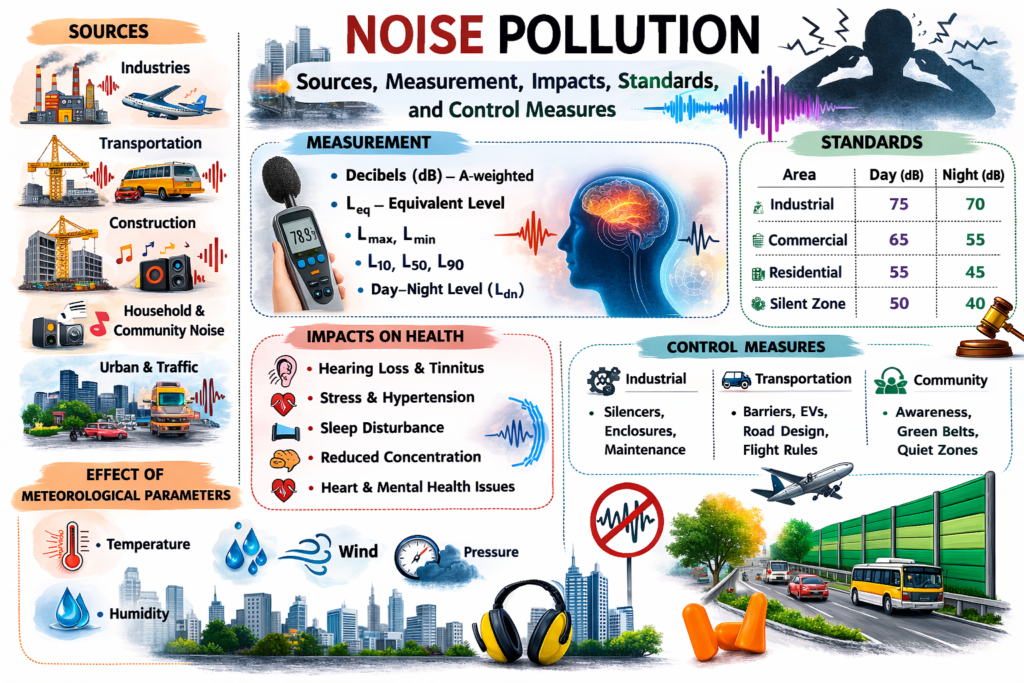
- Traffic noise is the dominant source of urban noise pollution, contributing nearly 55% of total environmental noise.
- Rapid urbanization, population growth, and increasing vehicle numbers have significantly raised noise levels.
- Typical urban traffic noise levels range between 55 dB(A) and 89 dB(A), often exceeding permissible limits.
- Noise standards are frequently violated across residential, commercial, and silent zones, especially in developing countries.
2. Research Distribution and Gaps
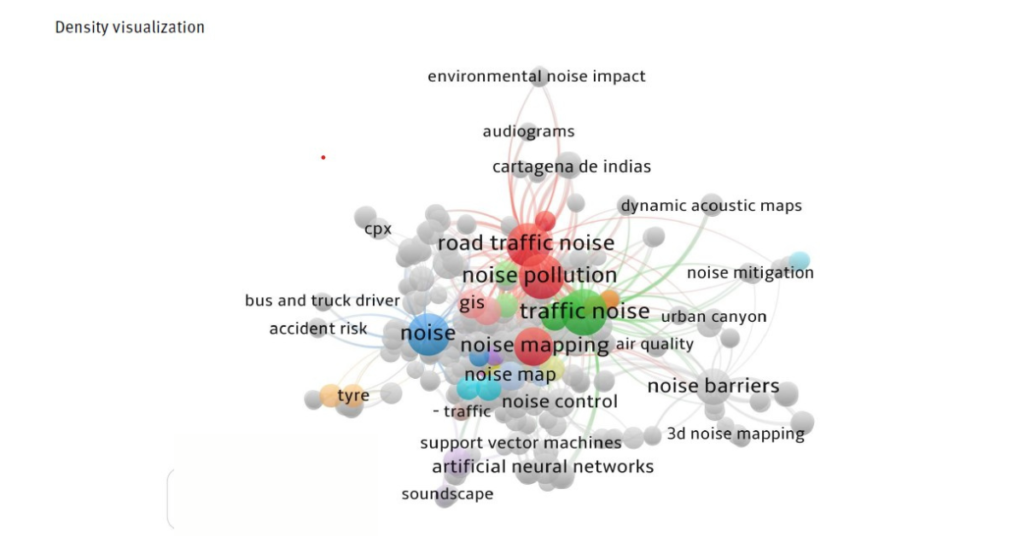
The study categorizes existing research into four major areas:
- Noise Monitoring – Very limited focus (~6%)
- Noise Exposure Studies – Limited (~7%)
- Noise Modelling & Prediction – Moderate (~30%)
- Noise Mitigation Strategies – Highest focus (~57%)
👉 This highlights a research gap in real-time monitoring and exposure assessment, despite their importance in policy-making.
3. Noise Monitoring and Measurement
- Noise monitoring helps identify problem zones, exposure levels, and propagation patterns.
- Common indices used include Leq, L10, L90, Lmax, and Lmin.
- Advanced approaches include:
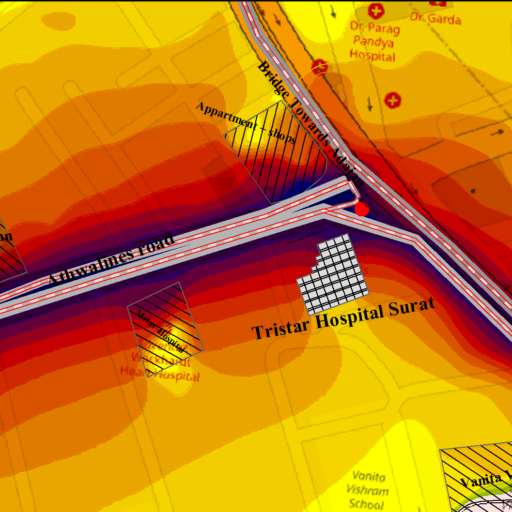
- GIS-based noise mapping
- Crowdsourcing using smartphone applications
- Studies confirm that urban noise levels consistently exceed regulatory limits in many cities.
4. Noise Exposure and Health Effects
- Continuous exposure to traffic noise leads to:
- Sleep disturbance
- Mental stress and annoyance
- Hearing loss
- Reduced productivity and learning ability
- Sensitive groups affected:
- Roadside residents
- School children
- Drivers and transport workers
- Example findings:
- Up to 41% of drivers showed hearing loss due to prolonged exposure.
- School noise levels near roads exceeded recommended limits by ~35%.
5. Noise Modelling and Mapping
- Noise models are essential for:
- Predicting noise levels
- Urban planning and decision-making
- Common modelling techniques:
- Multiple Linear Regression (MLR)
- Artificial Neural Networks (ANN)
- GIS-based noise mapping
- Key insights:
- ANN models outperform traditional models in predicting traffic noise.
- Traffic noise is influenced by:
- Vehicle speed and volume
- Road surface type
- Honking behavior
- Urban geometry
6. Noise Mitigation Strategies
The study emphasizes practical and cost-effective solutions:
a) Source Control
- Low-noise tires and pavements
- Electric vehicles
- Improved engine design
b) Path Control
- Noise barriers (reduce up to 15 dB(A))
- Vegetation belts and green infrastructure
- Acoustic materials and façade insulation
c) Receiver Protection
- Building design modifications
- Soundproof windows and walls
d) Urban Planning Measures
- Land-use zoning
- Traffic management (speed control, horn restrictions)
- Improved public transport systems
7. Role of Green and Sustainable Solutions
- Vegetation and landscaping can reduce noise by up to 9–11 dB(A).
- Green roofs and eco-friendly materials enhance sound absorption.
- Low-cost natural materials (e.g., jute, cotton waste) show strong potential for noise control.
8. Key Conclusion
- Urban traffic noise is a serious and growing environmental issue.
- Most cities, especially in developing countries, fail to meet noise standards.
- There is an urgent need for:
- Better enforcement of regulations
- Improved monitoring systems
- Cost-effective and sustainable mitigation strategies
👉 The study strongly recommends integrated approaches combining engineering, planning, and policy measures to effectively control urban noise pollution.
For more details read below article